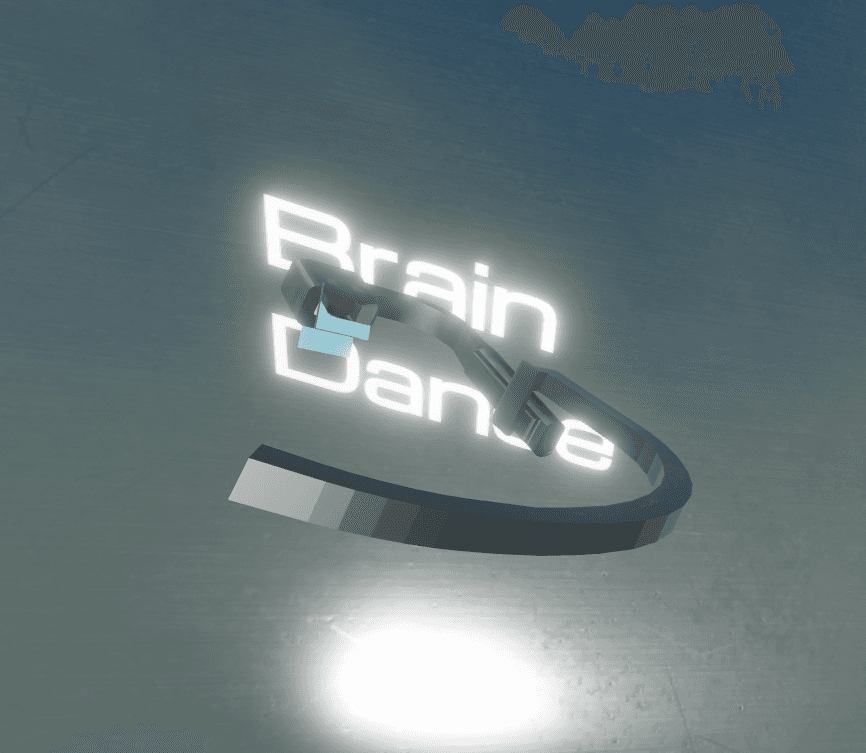
The assignment asked a question that most school projects avoid: how do you take a product idea from technical development all the way through to advertising? Most students would answer that in writing. This project answered it by building the product.
BrainDance was a head-mounted near-eye display concept built as a class 9 coursework project. The written work covered product development theory, design thinking, the V-model, and marketing frameworks including AIDA. The practical work was a wearable prototype that actually functioned, backed by renders, a launch-style video, and a classroom defense where the prototype was used live.
The optical setup that made it work
The micro display itself was a purchased component, a small screen sourced from overseas. What made the product original was the optical arrangement around it. Mirrors were positioned to redirect and magnify the display so that the image appeared as a medium-sized screen floating roughly two meters in front of the wearer, depending on headset and mirror adjustment.
The critical design choice was placement. The display and mirror assembly sat at eyebrow level, just below the direct line of sight, so the floating image was visible to the wearer without blocking their view of the room. That is a harder problem than it sounds. A heads-up display that covers your eye is a blindfold with a screen. A display that floats beside or below your natural sight line is a tool you can actually wear while interacting with the world.

During the class defense, I used the prototype as a teleprompter. The teacher and other students could try it and see the floating, hologram-like display clearly, because the optical arrangement was designed for external viewing as well as wearer use.
From hardware to marketing
The technical side included a Raspberry Pi running its default operating system, with a remote-screen approach that streamed PC desktop content over WiFi to the Pi while keyboard input controlled the remote machine. The wearer could see a Linux desktop, browser, terminal, notes, and videos through the display.
The product world extended well beyond the hardware. Blender, Roblox Studio, and Unreal Engine assets were used for concept renders and product visualization. Technical drawings documented the inner construction, components, and form factor. DaVinci Resolve was used for a launch-style advertising video. The marketing research covered design thinking, lean startup principles, social media strategy, AIDA advertising structure, and audience analysis.
The defense presentation leaned more heavily into the advertising and marketing side, while the written work weighted technical development. That split was deliberate. The project was designed to demonstrate the full product cycle, not just the engineering.
Scope
The coursework was research visualized through an experiment and first prototype. The optics, ergonomics, and power systems were functional, although not perfectly solved for daily use. Physical adjustment while walking or moving could be annoying.
And yet the prototype truly works. It can be worn and used, and the floating-screen effect is real. For a class 9 project where I chose to answer a product-development question by actually building the product, that is a strong outcome.
What I take from it
This project was an early lesson in the value of answering a question by doing the thing the question is about. The written work could have stood alone. Building the product made the theory legible and the defense genuine.

